Table of Contents
ToggleA kitchen remodel in Las Vegas isn’t just about aesthetics, it’s a smart investment in your home’s value and your daily quality of life. The desert climate, intense sun exposure, and unique design preferences of Vegas homeowners demand thoughtful planning and material selection. Whether you’re updating cabinets, replacing countertops, or tackling a full renovation, understanding local conditions and what you can realistically DIY versus outsource makes the difference between a successful project and a costly mistake. This guide walks you through the essentials of kitchen remodeling in Las Vegas, from budget planning to material choices that stand up to the heat.
Key Takeaways
- A kitchen remodel in Las Vegas typically returns 50–60% of costs in resale value and improves daily comfort while meeting buyer expectations for modern finishes and efficient layouts.
- Budget for kitchen remodeling in Las Vegas ranges from $5,000–$15,000 for basic refreshes, $30,000–$60,000 for mid-range updates, and over $100,000 for full renovations, plus a 10–15% contingency buffer.
- Choose heat-resistant materials like quartz countertops, plywood-core cabinets, glazed tile, and luxury vinyl flooring that withstand the desert climate and intense UV exposure.
- Desert living demands open-concept layouts with excellent ventilation, reflective finishes, and materials sealed against dust infiltration; avoid hardwood flooring and unglazed stone.
- DIY painting, backsplash tiling, and hardware replacement are manageable projects, but electrical, plumbing, gas work, and structural changes require licensed contractors and permits in Las Vegas.
- Plan your kitchen remodel for late fall through early spring when weather conditions support proper material curing and worker safety, with most projects taking 4–8 weeks for standard updates.
Why Kitchen Remodeling Makes Sense in Las Vegas
A kitchen remodel ranks among the highest-ROI home projects, typically returning 50–60% of costs in resale value. In Las Vegas specifically, updated kitchens are a draw, local buyers expect modern finishes, efficient layouts, and kitchens that stay cool in the heat. The city’s rapid real estate market means a well-executed remodel can set your home apart and attract serious buyers or simply improve your own daily comfort. Beyond resale, you’ll spend more time in your kitchen than almost any other room: upgrading appliances, workflow, and lighting directly improves your living experience. Las Vegas homes also benefit from kitchens designed with the desert climate in mind: heat-resistant materials, excellent ventilation, and reflective finishes that don’t absorb and radiate the sun’s intensity.
Essential Planning Steps Before You Start
Setting Your Budget and Timeline
Before you order a single cabinet or paint chip, nail down your budget and realistic timeline. A basic kitchen refresh (new paint, hardware, backsplash) runs $5,000–$15,000. A mid-range remodel (cabinet refacing, new countertops, updated appliances) typically costs $30,000–$60,000. A full gut-and-rebuild in Las Vegas can easily exceed $100,000, depending on structural changes and material quality.
Timing matters too. In Las Vegas, late fall through early spring offers the most comfortable working conditions: summer heat can affect material installation (adhesives cure differently, and worker safety becomes critical). Most kitchens take 4–8 weeks to complete if you’re not relocating utilities or walls. If you’re moving plumbing or electrical, add 2–4 weeks and factor in permit delays, the Clark County Building Department processes permits within 5–10 business days, but inspections can add time.
Tools like HomeAdvisor’s cost estimators break down expenses by material and labor in your region, helping you build a realistic budget. Create a contingency buffer of 10–15% for surprises (hidden water damage, outdated wiring behind walls, material delays).
Popular Kitchen Styles and Design Trends for Las Vegas Homes
Las Vegas homeowners gravitate toward clean, contemporary designs that complement the desert landscape. Modern minimalism, sleek cabinetry, open shelving, and handle-less drawers, remains popular because it visually expands smaller kitchen footprints common in older Vegas homes. Industrial-contemporary blends concrete countertops, stainless steel appliances, and exposed brick or stone accent walls, echoing the raw aesthetic of the surrounding Nevada landscape.
Spanish Colonial and Southwestern influences also thrive here. Think warm terracotta or saltillo tile accents, carved cabinetry, and earth-tone countertops that reference the region’s heritage. Transitional styles (mixing traditional and modern elements) appeal to homeowners wanting warmth without dated heaviness.
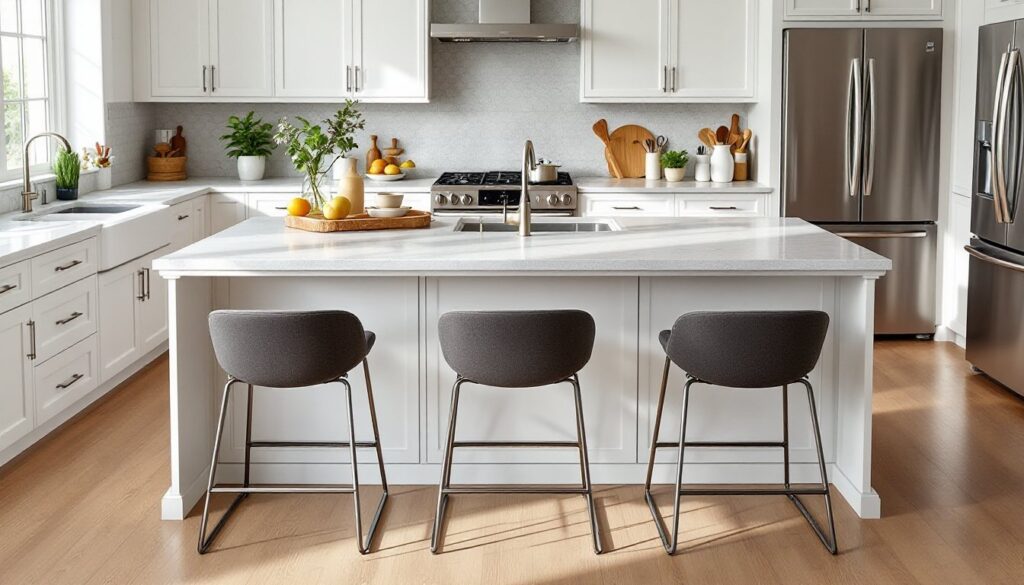
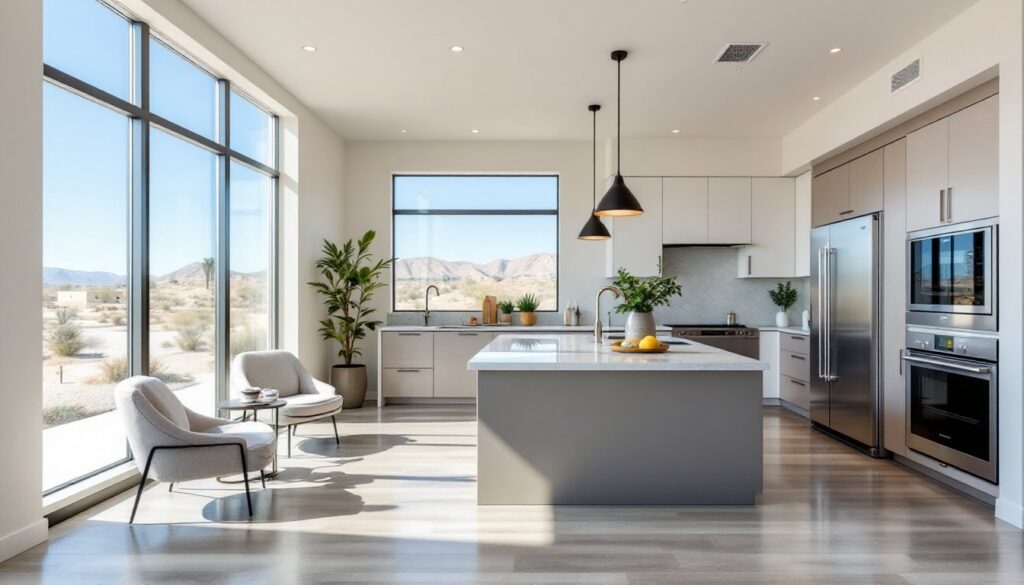
For Las Vegas specifically, open-concept kitchens connected to living areas dominate, especially in newer builds. This layout maximizes natural light and airflow, critical in the desert. If your kitchen is closed off, consider removing a non-load-bearing wall (only after confirming with a structural engineer and getting permits). Island seating has become almost standard, providing extra counter space, storage, and a social hub. Professional kitchen remodelers on Houzz showcase hundreds of Vegas-specific designs if you need inspiration.
Smart Material Choices for Desert Living
The Mojave Desert demands durable, heat-resistant materials. Standard laminate countertops degrade quickly under intense UV exposure: instead, choose quartz, granite, or solid-surface materials like Corian, which resist fading and thermal stress. Quartz is particularly popular in Vegas because it’s non-porous (won’t stain), heat-tolerant to around 400°F, and comes in hundreds of colors that mimic natural stone without the maintenance of real granite.
For cabinetry, solid wood expands and contracts with humidity swings, even indoors with AC. Plywood-core or MDF (medium-density fiberboard) cabinets with quality veneers or paint finishes are more stable and affordable. Ensure they’re sealed and finished to resist dust infiltration, desert dust creeps everywhere and gums up cabinet runners and hardware.
Backsplash tile should be glazed ceramic, porcelain, or glass. These don’t absorb heat or moisture, preventing warping or mold. Stay away from unglazed natural stone in kitchens: it stains easily and degrades under the alkaline salts in Vegas tap water. For countertop edge treatments, avoid overly ornate details that trap dust: simple, clean profiles are more practical.
Flooring matters too. Tile, polished concrete, or luxury vinyl plank (LVP) work well in Las Vegas kitchens because they don’t warp under heat fluctuations. Hardwood can warp and cup in the desert’s dry-then-humid cycles (monsoon season brings unexpected moisture shifts). If you love wood, engineered hardwood or wood-look tile is safer. Paint your kitchen’s interior walls with semi-gloss or high-gloss finishes, they’re easier to clean and reflect light, keeping the space feeling cooler.
DIY Elements You Can Handle Versus What Requires Professional Help
Many kitchen projects are DIY-friendly if you have basic tools and patience. Painting cabinets, removing old hardware, installing a backsplash tile (if the substrate is solid), and replacing light fixtures are reasonable weekend projects. Use high-quality cabinet paint designed for kitchen use, don’t cheap out on latex house paint. Prime first, apply thin coats, and sand between coats for durability. Backsplash tiling requires a level surface and grout that handles the thermal stress of the kitchen: if your substrate is uneven or textured, you’ll need drywall repair first.
Stop before electrical, plumbing, or gas work. Las Vegas requires licensed contractors for any work on circuits, water lines, gas lines, or venting that ties into main lines. DIY mistakes here risk fire, carbon monoxide poisoning, or code violations that prevent sale or insurance claims. Similarly, load-bearing wall removal, structural beams, and major layout changes demand a structural engineer and permits.
Appliance installation falls in a gray area. Gas cooktops and ranges should be vented and installed by a licensed tech, improper venting causes indoor air quality problems and safety hazards. Dishwashers and refrigerators are simpler if you’re handy with connections: but, if you’re rerouting water lines or installing new drain lines, hire a plumber. Cabinet installation and countertop templating are high-skill tasks: hire professionals unless you’ve done it before. ImproveNet’s guides outline which projects suit DIYers and which need licensed help in your area. Always pull permits for structural or mechanical work, your city expects it, and inspectors catch problems you’d miss.
Conclusion
A kitchen remodel in Las Vegas is achievable for homeowners willing to plan thoughtfully and respect the limits of their skills. Start with a realistic budget, choose materials built for the desert climate, and be honest about what you can DIY versus outsource. The payoff, a modern, efficient kitchen that handles Vegas heat and impresses future buyers, is worth the effort. Begin with a clear vision, get quotes from licensed contractors for the structural and mechanical work, and tackle the finish details yourself where you feel confident.