Table of Contents
ToggleKitchen island seating has evolved beyond basic bar stools. Stools with backs offer comfort, support, and a polished look that transforms how your kitchen functions and feels. Whether you’re planning a renovation or upgrading tired seating, understanding the differences between styles, materials, and sizes ensures you pick the right stools for your space and lifestyle. This guide walks you through everything you need to know to make a confident choice.
Key Takeaways
- Kitchen island stools with backs provide essential ergonomic support, distributing weight evenly and reducing lower back strain during extended seating or meals.
- Measure your counter height carefully—aim for 10–12 inches of clearance between the seat and counter overhang, typically requiring 24–26 inch stools for standard 36-inch counters or 30–32 inch stools for raised 42-inch bars.
- Choose materials based on durability and maintenance: hardwood frames need refinishing over time, metal offers low-maintenance durability, and performance fabrics resist stains better than cotton or linen in high-use kitchens.
- Style options range from modern and industrial designs with clean lines to traditional and farmhouse aesthetics, allowing kitchen island stools with backs to complement any kitchen cabinetry and décor.
- Space your stools 24–30 inches center-to-center for comfortable seating, and use felt pads or rubber feet to protect floors and reduce noise from movement.
- Test actual clearance for sitting and leaving by confirming guests can pull up a stool without hitting walls, fridges, or counters behind them before finalizing placement.
Why Backrests Matter for Kitchen Island Seating
A backrest transforms a kitchen island stool from a perch into actual seating. Without one, you’re leaning forward or gripping the counter, which gets uncomfortable fast, especially if someone’s sitting for 20 minutes while you’re cooking. A good backrest distributes weight evenly, reduces strain on your lower back, and makes lingering over coffee or assignments feel less exhausting.
Backrests also shape how people use your kitchen. With them, guests actually sit down instead of hovering. Kids doing assignments stick around longer. You can have real conversations instead of shouting across the counter. From a design angle, backrests add visual weight and sophistication, they make stools look intentional, not like afterthoughts.
Another practical win: a back provides something to grip when climbing on or off, which matters if you’ve got elderly relatives visiting or young children who need stability. It’s a small detail with real-world impact on safety and usability.
Styles and Designs to Match Your Kitchen Aesthetic
Your stools set the tone for the whole island. Pick something that clashes with your cabinets or counters, and it’ll feel off every time you walk in. Fortunately, the range of styles is wide enough that you’ll find something that fits.
Modern and Contemporary Options
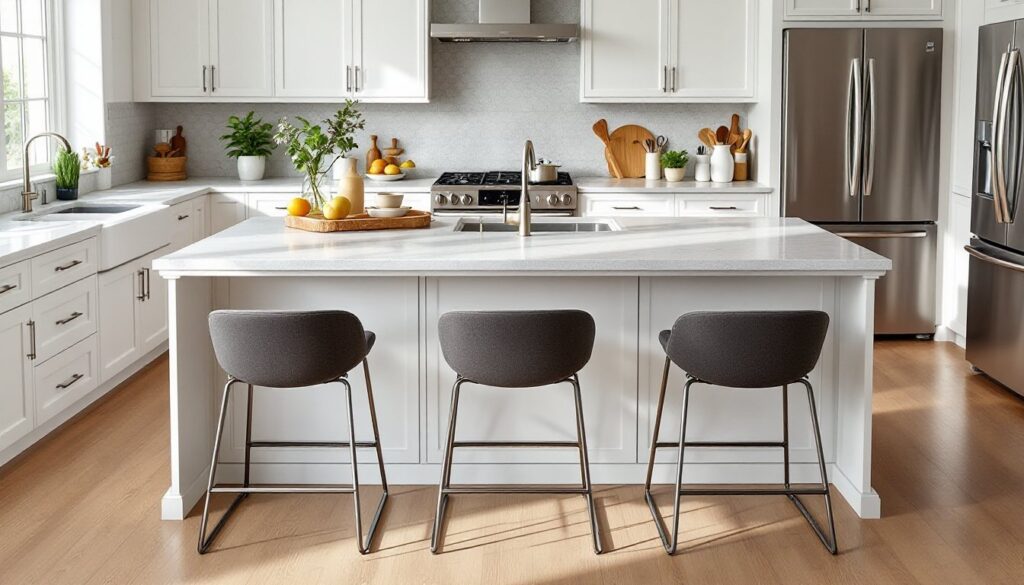
Modern stools emphasize clean lines, minimal ornamentation, and intentional materials. Metal frames (brushed steel, matte black, or polished chrome) paired with upholstered seats in leather or performance fabric feel current. Look for stools with a geometric backrest design, think a single curved bar or minimalist slats, rather than a full cushioned back.
Mid-century modern styles split the difference between retro and contemporary. Tapered wooden legs, molded plywood seats, and a gentle backrest curve deliver warmth without feeling precious. These work especially well if your kitchen has wood cabinetry or warm-toned counters. Consider pairing them with open shelving or stainless steel appliances for balance.
Industrial stools feature metal frames (often steel or wrought iron), sometimes with a wooden or metal seat. They’re durable and look great in kitchens with concrete counters, exposed brick, or metal-framed windows. The backrest is usually simple, a vertical post or light curve, so they don’t clutter the visual space.
Traditional and Farmhouse Styles
Traditional stools draw from classic upholstered dining chairs, think nailhead trim, turned wooden legs, and cushioned backs in linen or velvet. They work in kitchens with raised-panel cabinetry, granite or butcher-block counters, and warm lighting. They’re a bit fussier to maintain (upholstery shows spills), but they deliver formal polish.
Farmhouse styles lean into wood, casual fabrics, and a lived-in feel. Reclaimed or distressed wood frames, simple spindle backs, and slipcover-style seating create that cozy, country-kitchen vibe. Brands like Ana White offer free DIY plans for farmhouse-style stools if you’re comfortable building your own. Mismatched stools in similar styles also read as intentional farmhouse rather than random.
Shaker-inspired stools keep it minimal, ladder-back or frame-and-slat designs without excess decoration. They pair beautifully with white or cream cabinetry and are ageless, so you won’t feel pressured to update them in five years.
Materials and Durability Considerations
Material choice directly affects how long your stools last and how much maintenance they demand. Kitchen islands get heavy use, spills, humidity, people swinging their legs, so durability matters.
Wood frames offer warmth and a tactile quality, but they need protection. Solid hardwoods (oak, cherry, walnut) outlast soft woods. Make sure the finish is food-safe and moisture-resistant: a polyurethane or conversion varnish holds up better than lacquer in a humid kitchen. Expect to refinish over 10+ years.
Metal frames (steel, aluminum, wrought iron) are low-maintenance and industrial-feeling. Brushed finishes hide fingerprints better than shiny ones. Verify that welds are solid and the frame won’t wobble, a loose stool is both annoying and a safety risk. Powder-coated metal resists rust, but check reviews for finish quality: cheap coatings chip easily.
Upholstered seats and backs need a strategic fabric choice. Performance fabrics (like solution-dyed polyester or crypton) resist stains and clean up quickly, ideal for kitchens. Leather adds luxury but requires regular conditioning and shows spills immediately. Plain cotton or linen sounds nice but stains easily in a kitchen setting. Look for removable, washable covers if the manufacturer offers them.
Rattan, woven seagrass, or wicker backs look casual and airy but absorb moisture and food splatters. They work if your kitchen is relatively dry and protected, but they’re not ideal for heavy-use islands.
Research how stools from The Kitchn and other trusted kitchen design sources are reviewed, user feedback often reveals durability issues that don’t show up in product descriptions.
Choosing the Right Height and Size
Wrong height is the #1 stool complaint. You want roughly 10 to 12 inches of clearance between the seat and the counter overhang. If your counter is 36 inches tall, that means a 24 to 26-inch seat height. If it’s 42 inches (a raised bar), go for 30 to 32 inches. Always measure your actual counter before ordering.
Footrest height matters too. The footrest should sit 7 to 9 inches below the seat. Without one, dangling legs get uncomfortable fast, and it looks unfinished. Verify it’s included before buying.
Seat width should accommodate the person sitting. A 16-inch seat is snug: 18 inches is comfortable: 20+ inches is spacious. If you have a small kitchen, compact stools save space without feeling cramped. Wider backseats (anything over 14 inches deep) offer more lumbar support but take up floor space.
Spacing between stools depends on how many you’re fitting and whether people will actually share the island while cooking. Generally, allow 24 to 30 inches from center-to-center. If you’ve got three stools squeezed in, 24 inches feels tight: 28 to 30 gives breathing room. Measure your island length first, a standard 4-foot island comfortably fits two stools with generous spacing, or three if you’re okay with it being cozy.
Bring your phone and a measuring tape when shopping in person. Take a photo of the exact counter height and overhang depth so you can compare at the store or reference it online.
Installation and Space Planning Tips
Most stools don’t require installation, they arrive ready to use. But placement is everything. Position stools so backrests don’t interfere with cabinet doors, pantry access, or appliance swing paths. A 6-inch backrest doesn’t sound like much until someone’s trying to reach the sink and bonks their shoulder. Walk through your typical kitchen flow before committing to a spot.
If your stools have legs that extend, make sure they don’t create a tripping hazard or block under-cabinet storage or toe space. Some islands have a recessed footrest rail under the counter, check that your stool legs fit without jamming.
Protection for floors: Island stools are always moving slightly. Use felt pads or rubber feet on the legs to protect tile, wood, or concrete from scratches and to reduce noise when people shift positions. Self-adhesive pads are cheap and easy: they’re worth it.
Anchoring (if needed): Stools with high backs or narrow bases can tip if someone leans back hard. Check if your stools are stable solo or if they’d benefit from being anchored to the island. This is especially important if kids will be around. Some islands have pre-drilled holes or hardware designed for this: others don’t.
Consider woodworking project resources if you’re thinking about a DIY-built stool or modifying an existing design to fit your space. Custom-built stools let you match your cabinetry exactly and ensure the height is perfect for your counter.
Clearance for seating and leaving: Make sure people can actually sit down and get up without hitting a wall, fridge, or counter behind them. This often gets overlooked and then becomes obvious when your first guest tries to pull up a stool and can’t shift their legs. Test it with a dining chair pushed to the same spot if you can’t sit-test the actual stools in-store.