Table of Contents
ToggleGetting a new Bosch dishwasher installed is exciting, but staring at the control panel for the first time can feel intimidating if you’ve never owned one. The good news: starting a Bosch dishwasher is straightforward once you know the basic steps. Whether you’re replacing an old machine or upgrading to your first modern dishwasher, this guide walks you through loading, filling detergent, selecting the right cycle, and hitting start. We’ll also cover what to check before that first load and how to handle common hiccups. By the end, you’ll feel confident running your Bosch like a pro.
Key Takeaways
- Before your first load, inspect your Bosch dishwasher for shipping materials, packing bolts, and drain issues, then run one empty cycle to purge air and manufacturing residue.
- Load dishes correctly by placing larger items on the lower rack facing spray arms, keeping utensils separated, and leaving finger-width spacing between items to ensure proper water circulation.
- Use 1–2 tablespoons of detergent in the main dispenser, fill the rinse aid reservoir, and choose your wash cycle based on soil level (Eco for light loads, Heavy for baked-on food, or Auto for everyday flexibility).
- Close the door firmly until you hear a click, press start, and listen for normal operation sounds like gentle water swooshing and spray arm rotation—avoid opening the door mid-cycle.
- Common starting issues like the dishwasher not filling or stopping mid-cycle often resolve by checking the water supply valve, ensuring the door is fully latched, and verifying the control lock isn’t engaged.
- If problems persist beyond basic troubleshooting, consult your model’s manual or manufacturer’s website, as professional service may be needed for faulty inlet valves or worn spray arm bearings.
Check and Prepare Your Dishwasher Before First Use
Before you load a single dish, inspect your new Bosch dishwasher for shipping damage and ensure it’s properly installed. Open the door fully and look inside the tub, spray arms, and filter basket for any foam packing material, plastic caps, or transit bolts the manufacturer left to prevent movement during delivery. These must be removed, leaving them in place will block water flow and reduce cleaning performance.
Next, run a short empty cycle. Fill the detergent dispenser (usually located on the interior door) with a rinse aid, close the door, and select the shortest cycle available without any dishes inside. This purges air from the lines and removes any manufacturing residue or debris. Pay attention to whether water drains completely and listen for unusual grinding or rattling sounds. If you hear metal-on-metal noise or water doesn’t drain, stop immediately and check for leftover packing materials.
Also verify that your water supply line is connected to the hot water inlet (Bosch recommends 120–160°F water temperature for best detergent performance). Check under the sink to confirm the drain hose sits at the correct height and isn’t kinked. A properly installed drain should loop up under the sink before dropping into the standpipe or garbage disposal, this prevents siphoning and backflow.
Load Your Dishes and Fill the Detergent Dispenser
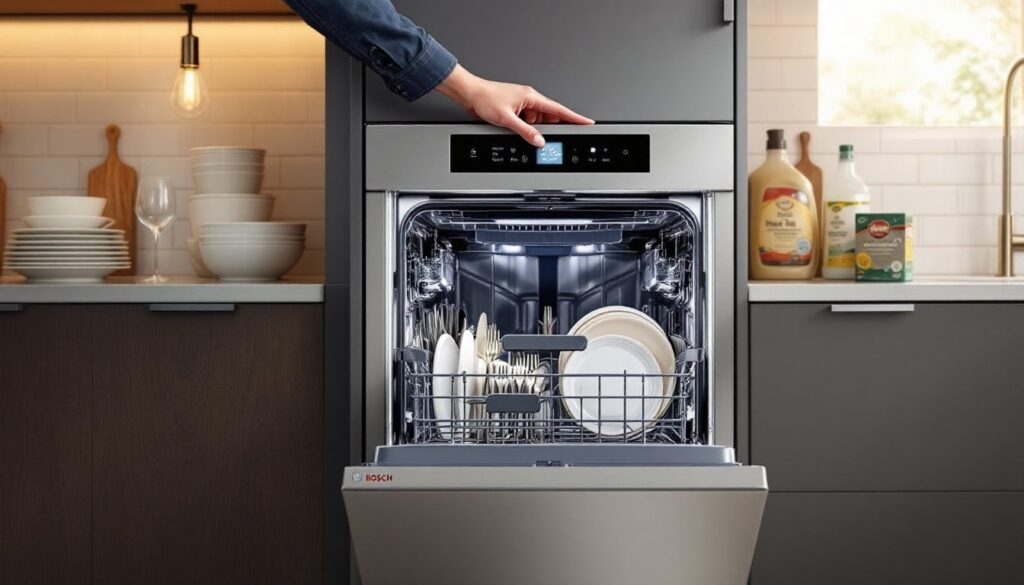
Loading a dishwasher correctly makes a huge difference in cleaning results. Place larger items like cutting boards and sheet pans along the sides or back of the lower rack, tilting them slightly to face the spray arms. Bowls and plates go in the lower rack facing inward and slightly downward, this angle lets water hit the soiled side. The upper rack is for glasses, mugs, cups, and smaller plates. Avoid nesting items too tightly: water needs to circulate around everything.
Keep utensils separated in the basket (handles up, some handles down to prevent nesting) and never overload, dishes should have at least a finger’s width of space between them. Avoid blocking the lower spray arm with tall items, and never place anything directly under the detergent dispenser.
Once dishes are loaded, it’s time to add detergent. Most modern dishwashers, including Bosch models, work best with a combination of powder and rinse aid rather than all-in-one pods, though either works. The main detergent cup (typically found on the interior door or upper rack) holds the bulk of detergent, use about 1–2 tablespoons for a full load, adjusting based on water hardness. Some models have a secondary pre-wash compartment: if yours does, add a teaspoon of detergent there too. The rinse aid dispenser is a separate reservoir: fill it until full (this improves drying and reduces spotting). According to how-to-use-a-dishwasher guides, proper loading and detergent dosing are the two biggest factors in clean dishes.
Select Your Wash Cycle and Settings
Bosch dishwashers typically offer four to six wash programs, each designed for different soil levels and load types. Start by studying your model’s control panel or owner’s manual, modern Bosch units have either mechanical dials, digital push buttons, or a touchscreen interface. Most models display cycle time and energy consumption so you know what to expect.
Understanding Common Wash Programs
Eco is the most energy-efficient option and works well for lightly soiled everyday dishes. It uses less water and lower temperatures, making it ideal for daily loads. Auto (or sensor wash) adjusts water temperature and cycle length based on how dirty the dishes are, it’s a good all-rounder if you’re unsure. Pots & Pans or Heavy is for baked-on food and cast iron: it uses hotter water and longer spray cycles. Quick or Express finishes in 30 minutes or less but works best only on lightly soiled dishes. Glass Care uses lower temperatures to protect delicate glassware.
Some models also offer delay start, which lets you run the cycle at a specific time (useful for off-peak electricity hours). Extra dry options increase the heating phase for better drying, especially helpful if your kitchen humidity is high. Choose a cycle based on soil level and what you’re washing, then adjust settings like heat dry or soil intensity if available.
According to The Kitchn’s kitchen guides, selecting the right cycle for your load prevents overuse of water and energy while ensuring optimal cleaning.
Start the Dishwasher and Monitor Operation
Once you’ve selected your cycle, close the door firmly until you hear a click or feel resistance, don’t slam it, but don’t close it gently either. Most Bosch models automatically lock the door once the cycle starts, so you’ll know it’s engaged. Press the start button (usually a dedicated button or a press-and-hold action, depending on your model). The control panel will light up, and you’ll hear water filling and the spray arms beginning to rotate.
Listen for normal operation sounds: gentle swooshing of water, the spray arms spinning, and the occasional hum from the motor. Don’t expect silence, but grinding, squealing, or loud rattling suggests a problem. During the first minute or two, water may flow out of the door seal very slightly as air is pushed out: this is normal. Water shouldn’t stream visibly from the door, but a tiny weep is fine.
Leave the dishwasher alone during the cycle. Modern units are designed to run safely unattended. Avoid opening the door mid-cycle, this interrupts the wash and can waste energy. Most cycles take 2–4 hours, and newer Bosch models are among the quietest on the market, so you might forget it’s running. When the cycle ends, you’ll hear a beep (or see a light indicator, depending on your model). Open the door slightly to let steam escape, then fully open it and unload from the bottom rack first.
Troubleshooting Common Starting Issues
Dishwasher won’t start at all: Check that the control lock isn’t engaged (hold the designated button for 3–5 seconds to unlock). Confirm the door is fully closed and latched. Verify the water supply valve under the sink is turned on. If power is completely off, check your breaker or GFCI outlet.
Water won’t fill: Listen for the water inlet valve opening (a quiet clicking sound). If you hear nothing, the water supply valve under the sink may be off or frozen. Turn it fully clockwise (on) and wait 30 seconds for water to reach the machine. If water still doesn’t fill after a full minute, the inlet valve may be faulty and needs professional service.
Cycle starts but stops mid-way: Most Bosch models have a safety feature that pauses if the door is opened. Close it firmly and the cycle will resume. If it stops without the door being opened, a float switch (which detects water level) may be stuck or the inlet valve may have failed. Try running a short cycle again: if it stops again, call a service technician.
Loud noise during operation: Some spray arm rattle is normal if a dish is blocking it. Open the door (cycle will pause), reposition the offending dish, and close the door again. If noise persists with nothing blocking the arm, the bearing on the spray arm may be worn and should be inspected by a professional.
Water leaks from the door: A small amount of moisture during the first few seconds is normal as air is expelled. Leaking during the main wash suggests the door latch isn’t tight. Remove any debris from the door gasket (rubber seal) using a damp cloth and close the door again. If leaking continues, the gasket may need replacement.
For issues beyond these basics, consult your Bosch manual or visit the manufacturer’s website, most models have online troubleshooting guides tailored to your specific model number. Resources like The Spruce’s home maintenance guides also offer appliance care tips.
Conclusion
Starting a Bosch dishwasher comes down to five essentials: inspect before first use, load correctly, add detergent, select your cycle, and press start. The learning curve is short, and once you dial in your preferences (which cycles work best for your family, how much detergent you actually need), it becomes second nature. If something doesn’t seem right, trust your instincts, unusual sounds or leaks deserve a quick manual check before they become bigger problems. With a little attention at the beginning, your Bosch will deliver reliable, quiet performance for years.