Table of Contents
ToggleIf you work with temperature-sensitive materials, whether that’s resin, adhesives, biological samples, or specialty chemicals, you’ve probably noticed that a standard kitchen refrigerator just doesn’t cut it. A lab refrigerator bridges the gap between home storage and professional-grade cooling, offering precise temperature control and built-in safety features you won’t find in consumer appliances. Unlike a regular fridge that bounces between 35–38°F, a lab refrigerator maintains rock-solid temperatures within a narrow range, making it indispensable for anyone serious about workshop chemistry, woodworking finishes, or sensitive material storage. This guide walks you through what to look for, how to choose the right unit, and how to keep it running reliably.
Key Takeaways
- A lab refrigerator maintains precise temperature control within ±2°F compared to standard fridges that swing 5–10°F, making it essential for storing temperature-sensitive materials like resin, adhesives, and finishes.
- Choose a lab refrigerator with a digital thermostat, temperature alarms, and a recovery time of 15–20 minutes to ensure your workshop materials stay within safe storage conditions.
- A 4–5 cubic foot benchtop or undercounter lab refrigerator is ideal for most home workshops, with adjustable stainless steel shelves and accessible drain pans for easy maintenance.
- Invest $500–1,200 in a quality lab refrigerator from a reputable manufacturer rather than budget options, as temperature stability is critical and directly impacts material longevity.
- Proper setup requires allowing transported units to sit upright for 4–6 hours before powering on, verifying actual temperature with a calibrated thermometer, and maintaining condenser coils every 3–6 months for reliable performance.
- Never store flammable solvents in a standard lab refrigerator; use only explosion-proof models, and always follow safety data sheets when storing hazardous materials.
What Is A Lab Refrigerator And Why Your Workshop Needs One
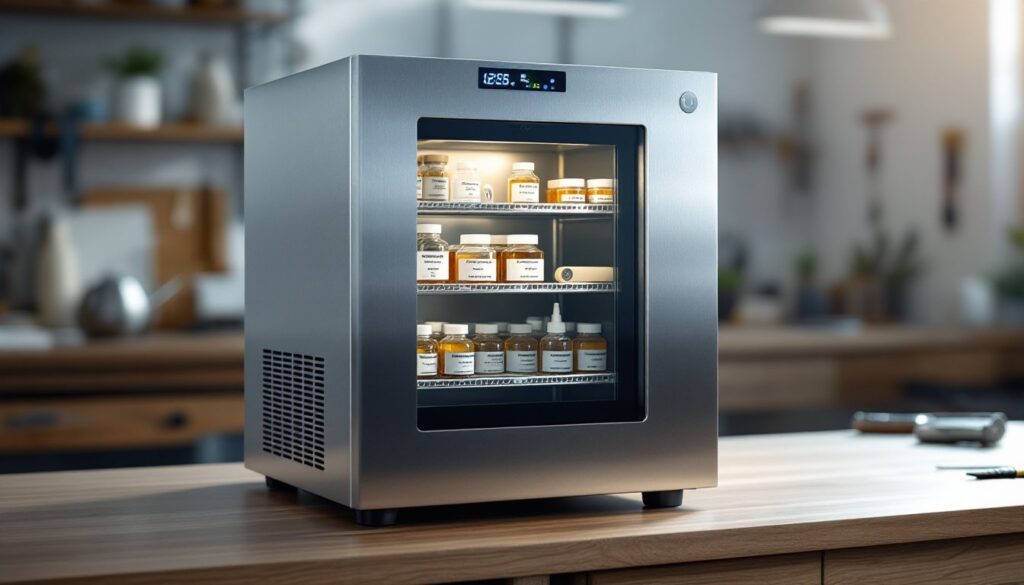
A lab refrigerator is a specialized cooling unit designed to maintain consistent temperatures for scientific, medical, or industrial materials rather than food storage. They range from compact benchtop models (about 2 cubic feet) to larger undercounter units (6–8 cubic feet), and they’re built to different standards than household appliances.
Why does that matter? Standard refrigerators cycle on and off to manage temperature, which creates swings of 5–10 degrees. That’s fine for milk: it’s disastrous for two-part epoxy that needs to stay between 65–70°F, or wood stain that separates when it gets too cold. Lab refrigerators use digital thermostats and compressor systems designed to maintain a setpoint ±2°F or better. Many models also include temperature alarms that alert you if the unit drifts out of range, a feature that’s saved countless projects from ruin.
They’re also built with different interior materials. Rather than plastic shelving, lab fridges often use stainless steel or epoxy-coated interiors that resist chemical spills, prevent off-gassing, and make cleanup straightforward. Some models include optional locks on doors, a feature that matters if you’re storing hazardous materials or running a workshop where multiple people have access.
For the serious DIYer, a lab refrigerator is an investment in consistency. You’re not fighting temperature swings or worrying whether a bottle of resin has been sitting at 50°F for too long.
Key Features To Look For In A Quality Lab Refrigerator
Temperature Control And Precision
This is the core of what makes a lab refrigerator worthwhile. Look for a unit with a digital thermostat that displays the current temperature and allows you to set a specific setpoint, ideally something you can adjust in 1-degree increments. Better models include a temperature alarm (audible and/or visual) that triggers if the interior temperature rises or falls outside a user-defined range. That’s crucial if you’re storing materials overnight or over weekends.
Check the temperature stability rating, reputable manufacturers specify this as ±2°F or better. Some premium units hold ±1°F, which is overkill for most home workshops but reassuring if you’re working with finicky materials. Also note the recovery time: how long it takes the fridge to bounce back to setpoint after you open the door. A good lab fridge recovers to within 2°F within 15–20 minutes: cheaper models might take 45 minutes or longer.
The compressor type matters, too. Sealed, hermetic compressors are quieter and more reliable than open-drive systems. If your workshop is close to living space, noise is worth considering, a lab fridge should hum quietly, not bang and rattle.
Storage Capacity And Interior Layout
Lab refrigerators aren’t designed for bulk storage: they’re built for organized access to smaller quantities of temperature-sensitive materials. A 4–5 cubic foot model is practical for most home workshops, large enough to hold several bottles of resin, finish, adhesive, or biological culture media, but compact enough to fit on a workbench or under a counter.
Pay attention to shelf height and adjustability. Shelves should be removable or adjustable so you can accommodate tall bottles or large containers. Stainless steel or epoxy-coated shelves are standard and resist staining and corrosion far better than painted steel or plastic. Check the door layout: does it have built-in racks or just bare space? For workshop use, adjustable door racks are a plus because they keep frequently accessed items within reach without crowding the main shelves.
Ventilation and drainage matter too. Make sure the unit has a rear vent or fan to push warm air away from the condenser, and verify that the drain pan is accessible, you’ll want to flush it periodically to prevent buildup and odors. Some models include a drain plug that makes emptying faster and less messy.
Choosing The Right Size And Type For Your Needs
Start by auditing what you actually need to store. Make a list: How many bottles of resin? How much adhesive? Are you storing anything that requires freezing (below 32°F)? Most lab refrigerators operate between 35–50°F, which works for most workshop materials, but some models offer a freezer compartment or can go as low as 20°F if you specify that option during purchase.
Benchtop models (2–3 cubic feet) work well if you’re short on space or storing just a handful of materials. They’re portable and fit easily on a bench or rolling cart. Undercounter models (5–8 cubic feet) are better if you want a dedicated, permanent setup and have wall or base cabinet space available. Built-in or recessed undercounter units require proper ventilation clearance, manufacturers typically specify 3–4 inches of space on the sides and back.
If your workshop is in a garage, consider ambient temperature swings. Most lab refrigerators are rated for operating temperatures between 50–90°F. If your garage drops below 50°F in winter or exceeds 90°F in summer, you’ll need a unit with a wider operating range or a climate-controlled space. Some manufacturers offer models rated down to 40°F ambient, which helps in unheated spaces.
Budget matters, but don’t cheap out on temperature stability. A $400–600 benchtop unit from a reputable manufacturer (check product reviews on sites like Good Housekeeping for tested appliance recommendations) will outperform a $200 clearance unit every time. Expect to invest $500–1,200 for a solid mid-range 4–5 cubic foot model.
Setup, Maintenance, And Safety Best Practices
Before plugging in your lab refrigerator, let it sit. If you’ve transported it horizontally, give it at least 4–6 hours in an upright position before powering on. This allows refrigerant to settle and prevents damage to the compressor. Read the manual, seriously. Most startup issues come from skipping this step or ignoring temperature acclimation recommendations.
Place the unit on a level, stable surface, away from direct sunlight and heat sources. Position it with adequate clearance on all sides (check the manual, but 3–4 inches is typical). This allows air to circulate around the condenser coils, which keeps the compressor from working overtime. Use a small spirit level to verify the unit is plumb: if it’s tilted, the door may not seal properly.
Temperature and labeling are critical for safety and tracking. Set the thermostat to your target temperature and wait 2–4 hours before loading materials. Once it’s stable, use a small stick-on thermometer or a separate calibrated thermometer to verify the actual temperature matches the display. Label everything clearly with contents, date stored, and expiration, especially if multiple people use your workshop. Store hazardous materials according to their safety data sheets (SDS). Flammable solvents, for example, should never go in a standard lab fridge: they require explosion-proof refrigeration.
Maintenance is straightforward but essential. Clean the condenser coils (on the back or underneath) with a soft brush every 3–6 months to keep dust from blocking airflow. Wipe down the interior monthly with a damp cloth, and empty the drain pan at least monthly, don’t let water sit there. Check door seals quarterly: if the gasket feels hard or cracked, it’s time to replace it (about $50–100 for parts and labor, or DIY if you’re handy).
Safety reminders: Never store flammable materials in a standard lab refrigerator. Use only explosion-proof models for solvents or other combustibles. Keep the interior dry, moisture encourages mold and can damage electronics. If the unit stops cooling, don’t open the door repeatedly: unplug it, wait 10 minutes, and plug it back in. If it still doesn’t cool after 30 minutes, call a technician, don’t try to troubleshoot internally.
Conclusion
A lab refrigerator is a small but important upgrade for any home workshop where temperature consistency matters. It takes the guesswork out of material storage, extends the shelf life of finishes and resins, and gives you peace of mind that your supplies won’t degrade due to temperature swings. Choose a unit with solid temperature control, adequate capacity for your needs, and reliable reviews. Set it up properly, maintain it regularly, and it’ll serve your workshop for years without drama.