Table of Contents
ToggleNatural gas is odorless, colorless, and deadly in high concentrations, which is why utility companies add that distinctive rotten-egg smell to it. But that human nose isn’t a reliable safeguard, especially for slow leaks you might not consciously notice. A quality gas leak detector sits on your counter or wall, alert 24/7, and buys you peace of mind your family deserves. Whether you’re dealing with an aging furnace, a gas stove, or a whole-home system, finding the best gas leak detector for your home means understanding sensor types, alarm thresholds, and the features that actually matter when safety is on the line.
Key Takeaways
- A quality gas leak detector for home is essential protection against undetected natural gas and propane leaks that your nose alone cannot catch, especially slow seeps near aging appliances and connections.
- Prioritize UL-certified detectors with catalytic-bead sensors, 300–400 ppm alarm thresholds, digital displays showing real-time gas levels, and dual-alarm systems (audio 85+ decibels plus visual alerts).
- Install gas leak detectors near all fuel-burning appliances (kitchen, furnace room, garage), test monthly using the built-in test button, check batteries every six months, and replace the unit every 5–7 years as sensor sensitivity degrades.
- Budget options ($30–50) offer basic detection, mid-range models ($50–120) include digital readouts and voice alerts, while premium detectors ($120+) feature WiFi connectivity and carbon monoxide sensing.
- If an alarm triggers, treat it seriously by evacuating immediately and contacting your gas utility’s emergency line—never assume it’s a false alarm and re-enter the home.
Why You Need A Gas Leak Detector At Home
Natural gas and propane leaks are serious. According to the U.S. Consumer Product Safety Commission, undetected leaks can accumulate to dangerous concentrations, leading to carbon monoxide poisoning, explosion risk, and worse. Your nose might catch a big leak, but smaller, slower seeps, especially near aging connections or poorly maintained appliances, often go unnoticed until something goes wrong.
If you heat with gas, cook on a gas range, or run a gas water heater or dryer, you’ve already got fuel lines in your home. Every connection is a potential failure point. Detectors catch what you can’t smell and alert you before you’re in danger. Some models also detect carbon monoxide, doubling their value for any home burning fuel for heat or cooking.
Building codes in most jurisdictions require gas appliances to have proper venting and connection standards (governed by the International Residential Code, or IRC), but that doesn’t eliminate the risk of leaks from wear, corrosion, or installation error. A detector is your human-level insurance policy.
Key Features To Look For In A Gas Leak Detector
Not all detectors are equal. Understanding what to prioritize keeps you from buying overkill gadgetry or settling for something too basic.
Sensor Type And Detection Range
Most consumer gas leak detectors use one of two technologies: catalytic beads or semiconductors. Catalytic-bead sensors are older, reliable, and detect a broad range of combustible gases (methane, propane, butane). Semiconductor sensors are faster-responding and more sensitive but can be more prone to false alarms in some conditions.
Detection range matters. A detector rated for 25 feet is adequate for a kitchen or bedroom: one covering 30+ feet makes sense if you’re protecting a larger open floor plan or a garage. Pay attention to whether the range is stated in ideal conditions or with obstacles (walls and furniture reduce effective range).
Sensitivity is measured in parts per million (ppm). Most detectors sound an alarm at 300–400 ppm for natural gas or propane, which aligns with safety standards. Anything lower can trigger false alarms from stove use: anything much higher delays warning. Stick with the standard range unless you have a specific reason (an older appliance, for instance) to go lower.
Display And Alarm Systems
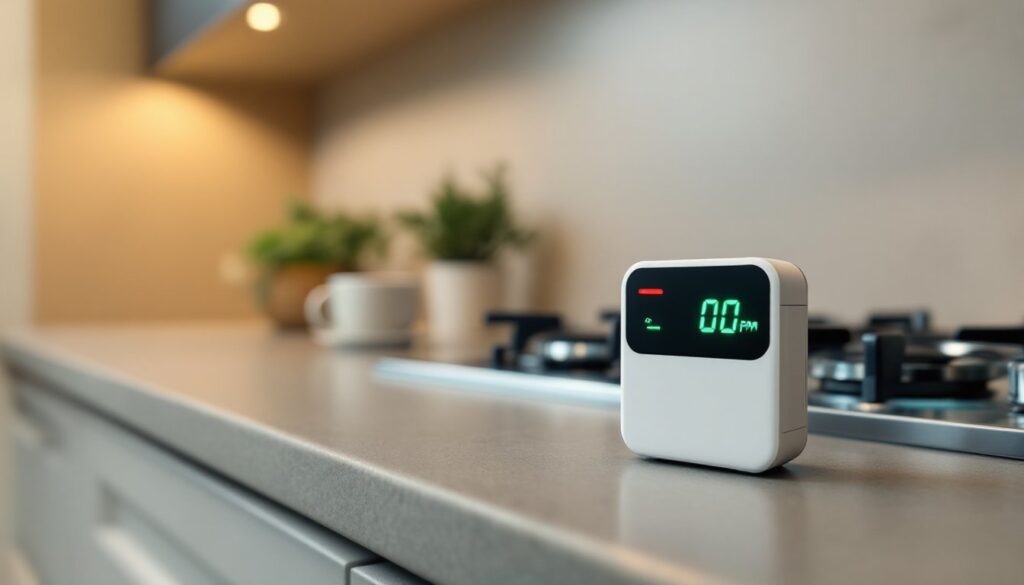
You need to know when the alarm triggers and why. A digital LCD display showing real-time gas levels in ppm is invaluable: you can spot a slow creep before it hits alarm threshold. A display also helps you confirm it’s working and not just a low battery.
Audio and visual alarms are non-negotiable. A loud alarm (85+ decibels) wakes people: a flashing LED or strobe light alerts you even if you’re wearing headphones or in another room. Some models add a voice alert (“Gas detected in kitchen”) which removes guesswork about which zone triggered the alarm.
Battery backup is a practical must-have. If your home loses power, you’re still protected. Look for detectors that clearly indicate low battery status on the display and sound a separate alert, not to be confused with a gas alarm.
Plug-in models are common for kitchens and living areas: battery-powered handheld models suit garages, basements, or situations where an outlet isn’t convenient. If you’re using a handheld, check battery life (good units run 200+ hours on a set of batteries).
Top Gas Leak Detectors For Homeowners
Rather than pitch brand names without substance, here’s what separates a solid detector from a mediocre one. Look for detectors with catalytic-bead or semiconductor sensors rated in the 300–400 ppm range, a digital display, and alarm thresholds aligned with ANSI/ASHRAE standards. Battery backup, fast response time (under 30 seconds), and a visual alarm component are practical differentiators.
Budget-conscious buyers can find serviceable models in the $30–50 range: they’ll handle gas detection but may have simpler displays and alarms. Mid-range units ($50–120) add digital readouts, voice alerts, and better sensor reliability. Premium options ($120+) bundle advanced features, warranty coverage, and dual-gas sensing (natural gas and carbon monoxide).
When evaluating reviews, home experts have tested, offering hands-on comparisons that go beyond spec sheets. Reputable sources like CNET and Tom’s Guide also review smart home safety devices, including gas detectors with WiFi connectivity that send smartphone alerts, a feature worth considering if you’re away from home often.
Make sure any model you pick carries UL certification (Underwriters Laboratories), which confirms it meets minimum safety and performance standards. Don’t be tempted by no-name detectors that skimp on certification: a few dollars saved isn’t worth the risk.
How To Use And Maintain Your Gas Detector
Buying a detector is step one. Using and maintaining it properly is step two.
Placement matters. Install plug-in models near gas appliances (kitchen, furnace room, garage) but away from direct heat or steam from cooking, which can trigger false alarms. Handheld models should be carried or stored in accessible spots. Never install a detector in a cabinet or enclosed space where gas can’t reach the sensor.
Test it monthly. Most detectors have a test button that cycles the alarm, use it. If the alarm doesn’t sound, the unit is failing and needs replacement. Write the test date on the unit with a marker: it’s a simple reminder.
Check batteries every six months. Whether your model runs on replaceable batteries or has a rechargeable pack, verify it’s holding charge. Replace or recharge before they’re dead: a detector without power is a paperweight.
Replace the unit every 5–7 years. Sensor sensitivity degrades over time. If your detector is older, swap it out even if it still passes the button test. Mark the purchase date on the unit so you remember.
If it alarms, take it seriously. Evacuate the home, call your gas utility’s emergency line (usually on your bill), and don’t re-enter until they’ve cleared it. False alarms are possible, but every alarm deserves respect. Never ignore one assuming it’s a malfunction.
If you live in a rental, check your lease. Many jurisdictions legally require landlords to provide and maintain gas detectors: don’t buy one yourself if the owner should. If you own your home, detectors are a modest investment in baseline safety that insurance companies often recognize favorably.
Conclusion
A quality gas leak detector is unglamorous equipment, it sits quiet on your kitchen counter until the day it matters. That’s exactly why it belongs in every home with gas appliances. Focus on UL-certified models with catalytic-bead sensors, digital displays, and alarm thresholds in the 300–400 ppm range, then place them strategically and test monthly. Your family’s safety isn’t worth cutting corners.