Table of Contents
ToggleMost homeowners don’t think much about their dishwasher until something goes wrong, or their dishes come out looking spotty. But understanding how long your dishwasher should run, and why, can save you time, water, and energy. Cycle times range anywhere from 30 minutes on an express cycle to over 3 hours on heavy-duty settings, depending on your machine and soil level. The answer isn’t one-size-fits-all: the right cycle length depends on what you’re washing, how dirty the dishes are, and whether your priority is speed or thorough cleaning. This guide walks you through the basics so you can run your dishwasher efficiently without second-guessing yourself.
Key Takeaways
- Dishwasher cycle times range from 30 minutes on express cycles to over 3 hours on heavy-duty settings, depending on soil level and machine type.
- Most modern dishwashers offer multiple cycle options: express (30–45 min) for light loads, normal (2–3 hours) for everyday use, and heavy-duty (3–4 hours) for baked-on food.
- The right dishwasher run time depends on what you’re washing—lightly soiled dishes need shorter cycles while heavily soiled cookware requires extended wash phases and hotter water.
- Proper load placement, regular filter cleaning, and using the correct detergent directly impact how long your dishwasher should run and overall cleaning effectiveness.
- Sensor or automatic cycles adjust water and runtime based on detected load size and soil level, offering the best balance of clean results and energy efficiency.
Standard Dishwasher Cycle Lengths Explained
Most modern dishwashers offer a range of cycle options, each designed for different situations. The express or quick cycle typically runs 30 to 45 minutes and handles lightly soiled dishes, think glasses, plates from light snacking, and bowls. This cycle uses less water and energy, making it efficient for everyday loads.
The normal or regular cycle is the workhorse setting, running between 2 to 3 hours. It balances cleaning power with resource efficiency, making it suitable for a standard load of mixed dishes from a typical meal. This is what most manufacturers recommend as the default.
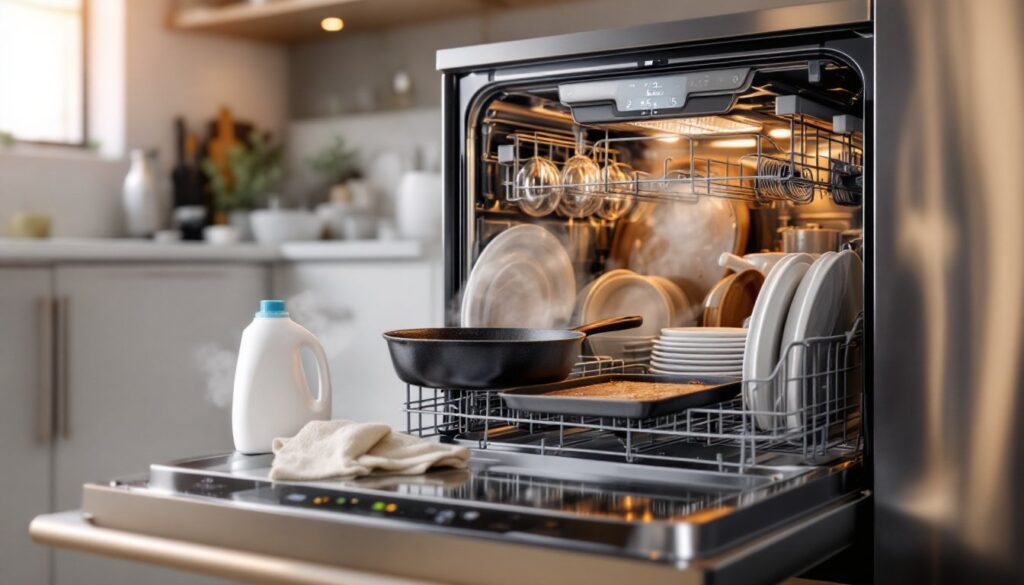
The heavy-duty or pots-and-pans cycle runs the longest, often 3 to 4 hours. It includes extended wash phases, hotter water temperatures, and higher water pressure to tackle baked-on food, cast iron, and heavily soiled cookware. Some machines also offer a sanitize cycle, which extends runtime to ensure all bacteria are eliminated, useful if someone in your household is immunocompromised or you’ve handled raw poultry.
Eco or green cycles have become standard on energy-efficient models, running 2 to 3 hours with lower water temperatures and reduced water volume. They clean adequately and use about 10–20% less energy than standard cycles, though the longer runtime and cooler water mean they work best on moderately soiled loads, not heavily caked-on debris.
Factors That Affect Dishwasher Run Time
Cycle time listed on your machine is a starting point, but several variables influence whether your dishes actually get clean and how long the machine runs.
Load Size and Soil Level
The biggest variable is how dirty your dishes are. Light soil, rinsed plates and glassware, might genuinely only need 30 to 45 minutes. Heavy soil, baked-on lasagna, dried pasta sauce, greasy pans, demands the full 3+ hour heavy cycle because the machine needs time for water jets, detergent, and temperature to work.
Load size matters too. An overstuffed dishwasher can’t circulate water effectively, meaning the machine might extend its cycle or spray arms can’t reach certain items. Conversely, a half-full load on a heavy cycle wastes water and energy, though most modern machines have sensors that adjust water usage based on detected load size.
Pre-rinsing has become less necessary on modern dishwashers with powerful sprays and enzyme-based detergents, but leaving massive chunks of food on plates forces the machine to work harder. A quick scrape into the trash is good practice: a full rinse under the tap is usually overkill and wastes water.
Water Temperature and Water Pressure
Hot water is the workhorse of any dishwashing cycle. Most cycles heat incoming water to 130°F to 140°F (54°C to 60°C), which helps detergent work and dissolves grease faster. If your home’s water heater is set lower, say 120°F, the dishwasher must spend more time heating water, extending cycle length. Setting your water heater to 120°F is standard for safety, but if your dishes consistently need rewashing, check your hot water temperature.
Water pressure from your home’s supply affects spray arm performance. Low water pressure (below 20 psi) forces the machine to compensate, sometimes extending cycle time or requiring a second wash phase. High water pressure (over 80 psi) can overwhelm certain valves, so newer machines have regulators built in. If your dishwasher’s performance has dropped, low household water pressure might be the culprit, worth diagnosing before assuming the machine has failed.
How to Choose the Right Cycle for Your Needs
Selecting the right cycle saves time without sacrificing results. Start with normal cycle for everyday use, it’s the sweet spot for most mixed loads and runs 2 to 3 hours. If dishes come out clean, stick with it. You don’t need the heavy-duty cycle unless you’re washing cast-iron cookware, sheet pans with baked-on food, or a stockpot.
Use the express cycle for lightly soiled items. After a breakfast of cereal bowls and coffee mugs, 30 to 45 minutes is plenty. You’ll save water and energy without any trade-off in cleanliness. This cycle pairs well with a quick rinse or scrape beforehand.
Reserve the heavy-duty cycle for truly dirty loads. Waiting 3+ hours for pots and pans might seem excessive, but it’s only necessary when you can’t easily wipe off dried-on food by hand. If items rinse clean with a quick run under the tap, they don’t need the heavy cycle.
The eco or energy-saving cycle works best when soil is light to moderate and you’re not in a rush. The cooler water temperature and longer runtime aren’t ideal for baked-on residue, but they’re excellent for reducing utility bills if you run your dishwasher daily. Modern detergents formulated for cooler temperatures perform better in eco cycles than older enzymes did.
Check your machine’s manual, many models have automatic or sensor cycles that detect load size and soil level, adjusting water and time automatically. These are underutilized: they often deliver the best balance of clean dishes and resource efficiency. Expert guidance on dishwasher settings and their purposes can help you understand your specific model’s options.
Tips to Optimize Dishwasher Performance and Save Time
Load placement matters more than many homeowners realize. Bowls and large dishes should go on the bottom rack, facing the center or toward the spray arm. Glasses, mugs, and small bowls belong on the top rack, angled downward so water drains properly, not pools. Plates stand upright or at an angle on the bottom rack. Don’t block the spray arms, they need to rotate freely.
Detergent choice influences cycle effectiveness. Older powder detergents left residue: modern gel or pod detergents with enzymes work faster, which is why newer machines can use shorter cycles. Avoid overloading with detergent, it doesn’t clean better and can leave film on dishes. Follow the machine’s recommendation or your water’s hardness level if that’s a variable.
Run your dishwasher when it’s full, not half-full. A full load is more efficient than two partial loads. If you’re running daily and often have partial loads, set dishes aside in a designated rack or basket so you remember to rinse them before they dry completely.
Check that smart home technology hasn’t made you skip basic maintenance. Even smart-connected dishwashers need their filters cleaned monthly and their spray arms checked quarterly. A clogged filter or blocked spray nozzles force the machine to run longer or restart cycles.
Clean the filter regularly, this is non-negotiable. A gunked-up filter reduces water circulation, meaning water can’t reach all dishes and the machine compensates by extending runtime or repeating wash phases. A quick rinse under running water or a soak in warm water with a touch of vinegar takes 30 seconds and directly improves performance.
Conclusion
There’s no universal “right” dishwasher runtime, it depends on your load, soil level, and what cycle you choose. Express cycles work fine for lightly soiled dishes, normal cycles suit everyday use, and heavy-duty cycles handle the truly grimy stuff. By understanding your machine’s settings and matching them to your actual needs, you’ll get consistently clean dishes without wasting water or time. Keep your filter clean, load strategically, and let the sensor cycles do their work.