Table of Contents
ToggleIf you’ve got pets at home, you’re probably wondering whether it’s safe to spray Ortho Home Defense around the house. It’s a common concern, and a smart one. Many homeowners reach for this broad-spectrum insect killer because it tackles ants, roaches, spiders, and other pests, but not everyone realizes the potential risks to Fido or Fluffy. The good news? You can use Ortho Home Defense safely around pets if you understand the product, follow the label carefully, and take the right precautions. This guide walks you through what you need to know.
Key Takeaways
- Ortho Home Defense is safe for pets when applied exactly as labeled, but requires strict adherence to removal, ventilation, and drying protocols to minimize exposure risks.
- Cats are significantly more sensitive to pyrethroids than dogs due to less efficient liver metabolism, making them the higher-risk pet in households using this product.
- Remove pets completely from treatment areas, ensure 2–4 hours of drying time plus additional ventilation, and wait 6–12 hours before allowing pets to re-enter treated spaces for optimal safety.
- Pet-safe alternatives like food-grade diatomaceous earth, essential oil sprays, perimeter treatments, and professional pest control can reduce chemical exposure while still managing infestations.
- Contact your veterinarian or the ASPCA Poison Control Center immediately if your pet ingests the product, inhales spray mist, or shows signs of tremoring, salivation, vomiting, or seizures.
Understanding Ortho Home Defense and Its Active Ingredients
Ortho Home Defense is a ready-to-spray insecticide available in different formulations (concentrate and ready-to-use versions). The active ingredients vary slightly depending on the product variant, but most contain bifenthrin or pyrethroids, synthetic compounds derived from natural pesticides found in chrysanthemum flowers.
Bifenthrin is a pyrethroid insecticide widely used in both residential and agricultural settings. It works by disrupting the nervous system of insects, causing paralysis and death. The product typically also includes inert ingredients that help with coverage and adhesion to treated surfaces.
When applying Ortho Home Defense indoors or on exterior surfaces, the chemical binds to treated areas and breaks down over time through exposure to sunlight and soil microbes. On indoor surfaces, breakdown is slower, which is why timing and ventilation matter so much when you have pets in the home.
Toxicity Risks for Dogs and Cats
The toxicity of Ortho Home Defense to pets depends on several factors: the concentration, route of exposure (ingestion, inhalation, or skin contact), your pet’s age and size, and the formulation used.
For Dogs: Bifenthrin has relatively low oral toxicity in dogs, the LD50 (lethal dose for 50% of test animals) is around 500–600 mg/kg. A small dog would need to ingest a significant amount of the concentrate to experience serious poisoning. But, dermal exposure can still cause irritation, and inhaling spray mist or dried residue poses respiratory risks, especially in smaller breeds or dogs with pre-existing respiratory conditions.
For Cats: Cats are more sensitive to pyrethroids than dogs. Their liver enzyme systems are less efficient at metabolizing these compounds, making cats the higher-risk pet in your household. Symptoms of pyrethroid toxicity in cats include tremoring, hypersensitivity, salivation, vomiting, and in severe cases, seizures. Even small exposures can trigger reactions.
According to reviews of ant killer products including Ortho Home Defense, safety concerns with pets are repeatedly flagged by users. The risk is real, not theoretical, which means the label’s pet warnings deserve your full attention.
Safe Application Practices If You Have Pets
Timing and Ventilation Guidelines
If you decide to use Ortho Home Defense in a home with pets, timing and ventilation are non-negotiable.
Before Application:
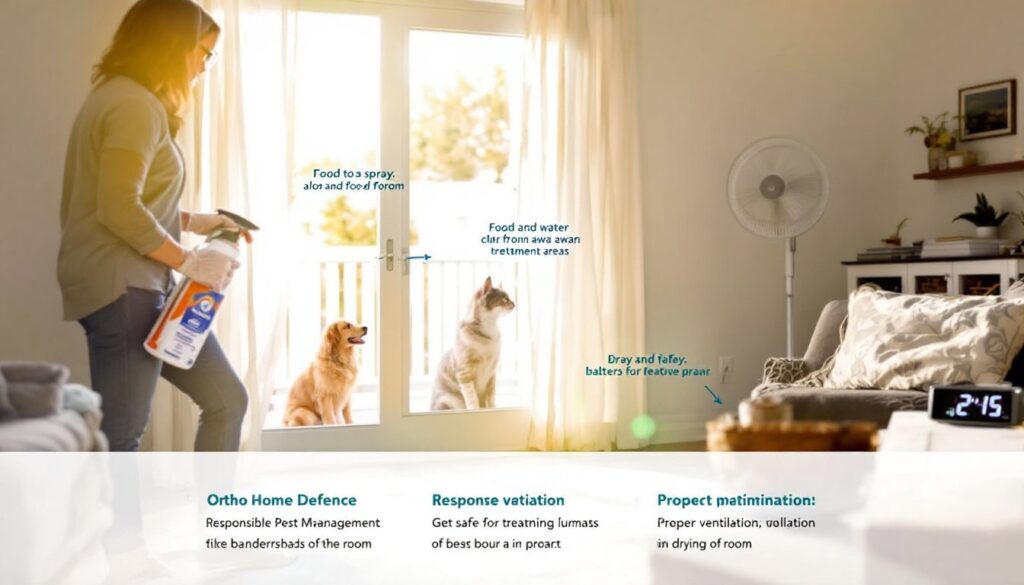
- Remove pets (and their bedding, food bowls, and water bowls) from the treatment area completely. Move them to a separate, sealed room or ideally out of the house entirely.
- Wear gloves, long sleeves, and eye protection while spraying. Although the product is labeled for homeowner use, you’re handling a chemical that’s toxic to mammals at certain doses.
- Dilute concentrates exactly per label directions. More product doesn’t kill bugs faster, it only increases risk.
During Application:
- Apply only to intended surfaces. Don’t overspray or saturate baseboards, floors, or furniture. Light, even coverage is sufficient and safer.
- Ensure good air circulation. Open windows and doors if weather permits. Use fans to push treated air toward ventilation.
- Avoid spraying directly on areas where pets rest or eat. Kitchen counters, pet beds, and toy storage should never receive direct application.
After Application:
- Let treated surfaces dry completely (usually 2–4 hours, depending on humidity). Bifenthrin residue becomes less volatile once dry.
- Ventilate for at least 2 hours after application, longer if you have cats or very small dogs.
- Do not allow pets to re-enter treated areas until surfaces are completely dry and the room has been well-ventilated. Some veterinarians recommend waiting 6–12 hours as an extra margin of safety.
- Keep pets away from baseboards and crevices where spray residue may accumulate longer. If your cat likes to groom along baseboards, use a physical barrier or choose an alternative treatment method.
The Ortho Home Defense label states it’s safe for use around pets when applied as directed, but “as directed” is the critical phrase. Skipping or shortening ventilation times defeats that safety claim.
Pet-Safe Alternatives to Consider
If you’re uncomfortable using Ortho Home Defense around pets, or if you have a cat or very small dog, several lower-toxicity options exist.
Diatomaceous Earth (DE): Food-grade DE is not technically a pesticide and has virtually no mammalian toxicity. It works physically, the powder damages insect exoskeletons. Downside: it’s messy, less effective on mobile pests like roaches, and you need to reapply after vacuuming. It’s best for ants in specific areas.
Essential Oil-Based Sprays: Products containing cedarwood, peppermint, or citronella are gentler on mammals than synthetic pyrethroids, though less potent. They’re adequate for light infestations and act more as repellents than killers.
Perimeter Treatments: Treat the exterior of your home with Ortho Home Defense or similar products while keeping pets indoors. Many household pests enter from outside, so a strong exterior barrier reduces the need for interior applications. This approach is particularly effective for ants, spiders, and roaches.
Integrated Pest Management (IPM): Combine exclusion (seal cracks and gaps), sanitation (remove food sources and clutter), and targeted spot treatments only where necessary. IPM is slower but safer long-term.
Professional Pest Control: Licensed pest control operators often use pet-safe applications and have experience managing infestations without exposing animals. Cost is higher, but so is peace of mind. Some offer pet-safe certifications. Home organization and cleaning hacks can also help reduce pest attractants before you resort to chemicals.
Choose based on the severity of your pest problem, your pet’s sensitivity level, and your comfort with chemical applications.
When to Contact a Veterinarian
If your pet has ingested Ortho Home Defense, inhaled spray mist during application, or shows signs of neurological distress after treatment, don’t wait, call your veterinarian or animal poison control immediately.
Warning signs in dogs: Vomiting, diarrhea, drooling, trembling, lethargy, loss of appetite, or difficulty breathing.
Warning signs in cats: Salivation, tremoring, hypersensitivity to sound or touch, vomiting, seizures, or unusual behavior.
The ASPCA Poison Control Center operates 24/7 and charges a consultation fee, but they’re invaluable if your pet was exposed and you’re unsure of the risk level. Have the product label or ingredient list ready when you call. Time matters in poisoning cases, minutes count.
Veterinarians can induce vomiting, administer activated charcoal, or provide supportive care depending on the exposure route and severity. Even if symptoms seem mild, document the incident. Your vet may want to monitor your pet for delayed effects.
Conclusion
Ortho Home Defense is safe for pets when used carefully and exactly as labeled. The key is removing animals before spraying, ventilating thoroughly, allowing surfaces to dry completely, and keeping pets away from treated areas until you’re certain residues have settled. But, cats and very small dogs carry higher risk due to their sensitivity to pyrethroids. If you have either, lean toward pet-safe alternatives or hire a professional. When in doubt, contact your veterinarian, they know your pet’s health history and can advise you on the safest course of action for your specific situation.