Table of Contents
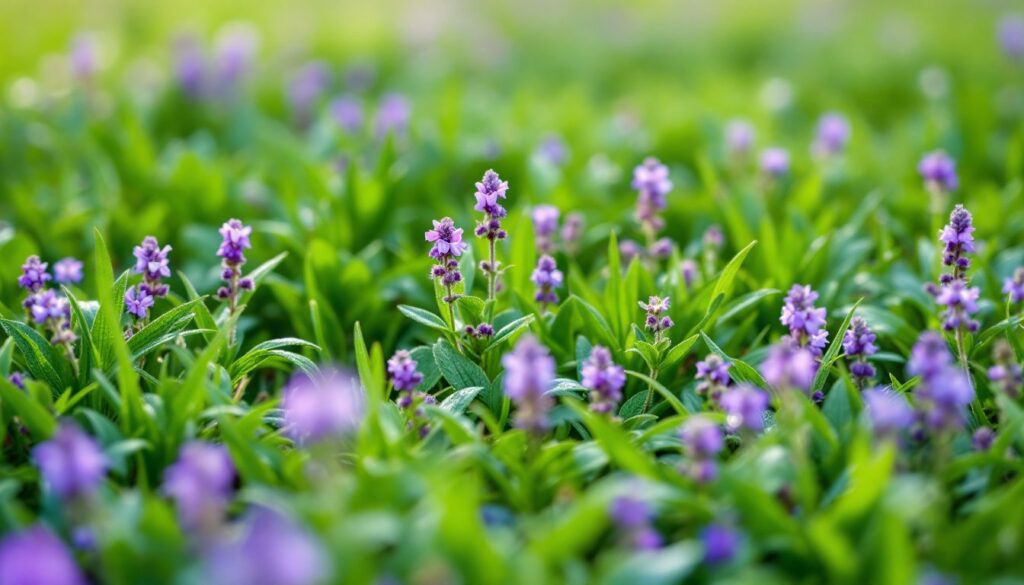
ToggleIf you’ve noticed small purple or violet flowers popping up in your lawn this spring, you’re not alone. Purple-flowering weeds are among the most common uninvited guests in residential yards, especially in cooler climates and during wet seasons. The challenge? Many homeowners don’t realize they’re looking at weeds until the problem has already taken hold. Unlike dandelions, which stand out yellow and obvious, purple-flowering weeds can almost look intentional, until they spread. This guide walks you through identifying the most common purple-flowering lawn weeds, understanding why they thrive in your yard, and choosing the right removal strategy, whether that’s pulling by hand or using targeted herbicides. The goal is to help you reclaim your lawn without guesswork.
Key Takeaways
- Identifying purple-flowering lawn weeds like henbit, purple deadnettle, creeping thistle, and ground ivy early allows you to remove them before they set seed and create recurring problems.
- Hand-pulling is most effective for winter annuals like henbit and purple deadnettle when soil is moist, but perennials require persistent digging or repeated interventions to eliminate.
- Lawn weeds with purple flowers thrive in thin turf, compacted soil, and poor drainage—maintaining grass at 2.5 to 3.5 inches tall and overseeding bare patches prevents infestations from establishing.
- Selective broadleaf herbicides (2,4-D, MCPA, dicamba) work well on purple deadnettle and ground ivy, while creeping thistle requires glyphosate applied in late summer when energy moves to roots.
- Weekly spring scouting for new growth and annual soil testing to adjust pH and organic matter are the most cost-effective long-term strategies to shift your yard from weed-prone to grass-dominant.
Common Purple-Flowering Weeds in Residential Lawns
Henbit and Purple Deadnettle
Henbit (Lamium amplexicaule) and purple deadnettle (Lamium purpureum) are winter annuals that flower in early spring, typically March through May in most of the United States. Both belong to the mint family and share similar characteristics: square stems (a mint family trait), hairy foliage, and small purple to pink flowers arranged in a dense spike. Henbit has rounded, stem-clasping leaves and grows 4 to 12 inches tall, while purple deadnettle displays heart-shaped upper leaves and rarely exceeds 10 inches in height.
The key difference? Henbit flowers are arranged more loosely along the stem, while purple deadnettle’s flowers cluster more tightly at the top. Both are easy to pull by hand in moist soil, making them ideal candidates for manual removal if caught early. Many homeowners overlook these early-spring weeds because they often die back on their own as temperatures warm, but they set seed prolifically before disappearing, meaning they’ll return next year unless you remove them before flowering.
Creeping Thistle and Ground Ivy
Creeping thistle (Cirsium arvense), also called Canada thistle, is a perennial that flowers mid-summer with distinctive purple, thistle-like blooms about one inch across. It’s aggressive, deep-rooted, and spreads through both seeds and underground rhizomes. Ground ivy (Glechoma hederacea), even though its innocuous name, is equally problematic: a low-growing perennial with small purple flowers and a creeping, rooting habit that allows it to quickly blanket bare soil or thin turf. Unlike henbit and purple deadnettle, neither of these will fade away naturally, and both require persistent intervention to eliminate. Creeping thistle’s deep taproot makes hand-pulling difficult unless the soil is extremely moist, and any root fragment left behind can regenerate. Ground ivy grows through a spreading network of stems that root at the nodes, making it frustratingly resilient to single-pass treatments.
Why These Weeds Thrive in Your Yard
Purple-flowering weeds exploit the same conditions that stress your grass. Thin or bare lawn patches, soil compaction, poor drainage, and low mowing heights all create space for weeds to establish. Winter annuals like henbit and purple deadnettle germinate in fall, overwinter in your lawn, and flower as temperatures warm, they’re specifically adapted to the dormant season when cool-season grasses are slowed. Perennials like creeping thistle and ground ivy thrive in neglected areas and are nearly impossible to out-compete with weak turf.
Moisture is another factor. Poorly draining soil keeps soil soft and acidic, favoring certain weeds over others. Compacted soil from foot traffic or heavy equipment prevents grass roots from establishing deep, vigorous growth. If you’ve got bare patches, whether from dog traffic, winter kill, or disease, weeds move in fast. Thistle is particularly aggressive in disturbed areas and along pathways.
The other truth: timing matters enormously. Once purple deadnettle or henbit flower and drop seed (usually by late May), you’re looking at a new generation of seedlings the following fall. Early identification and removal before flowering is the single most cost-effective strategy, because you prevent the seedbank from replenishing.
Manual Removal and Prevention Techniques
Hand-pulling works best on winter annuals like henbit and purple deadnettle, especially right after rain or when soil is moist. Grip the plant at the base, pull slowly to get the entire root, and discard in a trash bag, not your compost pile, since viable seeds may remain. For creeping thistle and ground ivy, hand-pulling alone is usually insufficient. You’ll get frustration instead of results.
For creeping thistle, dig out as much of the root as you can reach (ideally 6 to 8 inches deep) using a dandelion digger or narrow shovel. Any root fragments left behind will sprout new plants. If you’re dealing with a larger infestation, repeat digging every few weeks through summer: this exhausts the plant’s energy reserves. Ground ivy requires similar persistence: pull or rake out the runners and foliage, then monitor the area weekly. If stems re-root, you’re catching a new generation before it establishes.
Prevention is equally critical. A thick, healthy lawn is the best defense. Maintain grass height at 2.5 to 3.5 inches, taller turf shades soil and crowds out seedlings. Overseed thin areas in fall (for cool-season grasses) or spring (for warm-season species). Add a slow-release, nitrogen-based fertilizer in early fall to build root strength before winter. Aerate compacted soil in fall or spring to improve drainage and allow grass roots to penetrate deeper. Fill bare patches with garden soil and appropriate grass seed varieties suited to your region and sun exposure. Most importantly, remove weeds before they flower, this single action breaks the cycle and prevents years of repeat problems.
Chemical Control and Herbicide Options
If manual removal isn’t practical or the infestation is severe, selective herbicides offer an alternative. Post-emergent, broadleaf herbicides containing 2,4-D, MCPA, or dicamba work well on henbit, purple deadnettle, and ground ivy without harming established cool-season grasses. Apply when weeds are actively growing (typically March to April for winter annuals, or spring/early summer for perennials) and temperatures are between 50 and 85°F. Rain within 6 hours of application can reduce effectiveness, so time applications for dry weather.
For creeping thistle, broadleaf herbicides are less reliable because the deep root system often survives or regenerates. A non-selective herbicide like glyphosate (Roundup) kills the entire plant but will also kill surrounding grass. Use a wick applicator, cardboard shield, or spray carefully on isolated patches to minimize collateral damage. Alternatively, apply glyphosate in late summer or fall when the plant is translocating energy back to roots: this improves kill rates. Always read and follow label directions: herbicides vary in concentration, application rate, and safety precautions.
Two caveats: First, some herbicides require a permit or licensed applicator depending on your locality, check with your county extension office if you’re treating a large area. Second, repeated herbicide use without changing active ingredients can build herbicide resistance in persistent perennials. Rotate between different herbicide families (2,4-D one year, dicamba the next) if you’re treating the same area season after season. Cost ranges from $10 to $50 per application depending on product and area size, but effectiveness improves with correct timing and technique.
Maintaining a Weed-Free Lawn Long-Term
The reality of lawn care is that weeds never fully disappear, they’re always waiting for an opportunity. Your job is to make your lawn so inhospitable that purple-flowering weeds (and others) can’t gain a foothold. Consistent mowing at the right height prevents light-seeded weeds from establishing. A thick turf is a weed barrier: sparse grass is an invitation.
Scout your lawn weekly in spring and early summer. Pulling a few henbit plants in March takes 10 minutes. Letting them flower and reseed means dealing with hundreds next year. In fall, overseed bare or thin areas: dormant-seeded grass germinates as temperatures drop, filling gaps before winter annuals arrive.
For perennial problem areas, compacted pathways, drainage swales, or thin patches, consider alternatives to grass. A landscape design approach using hardscaping or ground covers can be more practical than fighting weeds indefinitely. Stone pathways, mulched beds, or shade-tolerant groundcovers reduce the lawn footprint and eliminate high-maintenance problem zones.
Finally, improve soil health. A soil test (available through your county extension for $15 to $30) tells you pH, nutrient levels, and organic matter content. Acidic soil favors certain weeds: raising pH slightly through lime application makes conditions better for grass. Adding 1 to 2 inches of compost annually builds organic matter, improves drainage, and strengthens grass vigor. These aren’t quick fixes, but over 1 to 2 seasons they fundamentally shift your yard from weed-friendly to grass-dominant, making management dramatically easier.