Table of Contents
ToggleFinding an indoor bug spray that actually works without putting your kids or pets at risk is a legitimate concern for most homeowners. The problem is that many conventional pesticides carry heavy chemical loads, pyrethoids, neonicotinoids, and organophosphates, that can linger on surfaces and in the air long after you’ve sprayed. This guide cuts through the marketing noise and walks you through what to look for in pet-safe indoor bug sprays, how to identify truly safe formulas, and how to apply them correctly so your family stays protected from both pests and unnecessary chemical exposure. Whether you’re dealing with a seasonal invasion or a year-round problem, you’ll find straightforward advice on what actually works.
Key Takeaways
- Indoor bug spray safe for humans and pets should use pyrethrin, pyrethroids, or essential oils like geraniol and cinnamon that break down quickly without leaving harmful residue.
- Children and pets are more susceptible to chemical exposure indoors due to smaller body mass and time spent on floors and furniture, making safe product selection critical.
- Always check EPA registration labels and pet-safety designations, and avoid formulas containing organophosphates, carbamates, or neonicotinoids for household use around animals.
- Proper application involves short bursts 6-8 inches from surfaces, good ventilation through windows, and keeping family members out of treated areas for 2-4 hours after spraying.
- Start with a small test can of natural oil-based sprays for light infestations, then escalate to pyrethrin formulas only if needed, and always store all bug sprays in a locked cabinet away from children and pets.
Why Indoor Bug Control Matters in Your Home
Indoor bugs aren’t just a nuisance, they’re a health and comfort issue that affects how you live in your own space. Mosquitoes, flies, and other insects can carry diseases, leave itchy bites, and contaminate food prep areas. At the same time, you can’t just spray heavy-duty insecticides throughout your home without thinking about what your kids or pets breathe in or contact.
The stakes are different indoors than outdoors. Your home is an enclosed environment where pesticide residue can accumulate, especially if you’re spraying regularly. Children and pets spend significant time on floors and furniture, where spray settles. Their smaller body mass means they’re more susceptible to chemical exposure. This is why choosing an indoor bug spray safe for humans and pets isn’t just a preference, it’s a practical health decision. A safe formula protects everyone in the house while still handling the pest problem.
Key Ingredients to Look for in Pet-Safe Formulas
When you’re shopping for a pet-safe indoor bug spray, the ingredient label tells you everything. Safe formulas rely on active ingredients that break down quickly or have low toxicity to mammals. The most reliable options include pyrethrins and pyrethroids (synthetic versions of compounds found in chrysanthemum flowers), essential oils like geraniol and cinnamon, and insect growth regulators such as pyriproxyfen.
Pyrethrins are naturally derived and break down fast in sunlight and air, a major advantage indoors where they degrade within hours to days. Pyrethroids are synthetic copies that last slightly longer but still break down much faster than older organophosphate chemicals. Both are much safer for pets than legacy pesticides, though you’ll still want to keep animals out of the room during application and for a few hours after.
Also look for sprays labeled with EPA registration (that number on the label means the formula has been tested and approved for household use) and check whether it’s marked specifically safe for pets. Some labels will say “safe when used as directed” for certain animals, don’t ignore that fine print. Avoid anything containing organophosphates, carbamates, or neonicotinoids for indoor use around pets.
Natural and Plant-Based Options
Natural doesn’t always mean safer, but plant-based essential oils, especially geraniol, cinnamon, rosemary, and clove, work well for light infestations and maintenance. They’re volatile, meaning they evaporate quickly and don’t leave residue on surfaces where pets walk. Formulas built on these ingredients tend to be gentler on respiratory systems too.
That said, natural oils work best as a prevention or supplemental spray for small pest populations. If you’ve got a heavy infestation, you might need a pyrethrin-based formula for better knockdown power. Also, some pets, especially cats, can be sensitive to certain essential oils, so read the label carefully. Sprays featuring spider repellents with geraniol and natural plant compounds are gaining traction as homeowners seek gentler solutions.
Indoor Bug Sprays Safe for Children and Pets
The best pet-safe indoor bug sprays on the market today typically use pyrethrin or pyrethroids as their active ingredient, paired with minimal inert fillers. Products like Zevo flying insect spray use essential oils and are specifically formulated for homes with pets. Wondercide indoor spray relies on cedar oil and geraniol, both naturally repellent to insects without the harshness of synthetic chemicals.
For families with young children, look for sprays that specify they’re safe for nurseries or children’s rooms. Mighty Mint spray uses peppermint oil and is a solid choice if you want zero synthetic pesticides. If you need heavier coverage and don’t mind pyrethroids, Ortho Home Defense and Raid Essentials are reliable mid-market options that carry lower toxicity profiles than traditional Raid formulas.
When choosing between options, consider your specific pest problem. Flying insects (gnats, fruit flies, mosquitoes indoors) respond well to aerosol sprays. Crawling insects (ants, roaches, spiders) often need a residual formula that sits on baseboards and corners. Some products work for both, but read the label to confirm effectiveness against your target pest.
One practical tip: buy a small can first and test it in one room. Watch how your pets react and whether the smell bothers your family. Some people find essential oil sprays smell better: others prefer unscented formulas. This trial run costs less than discovering mid-infestation that your household hates the product. Store all bug sprays in a locked cabinet away from children and pets, even the pet-safe ones. Ingesting any pesticide formula isn’t safe.
Application Tips for Maximum Safety
How you apply the spray matters as much as which formula you choose. The goal is effective pest control with minimal exposure to your family and pets. Start by removing or covering food, water bowls, and bedding before you spray. Close windows and doors to keep the product concentrated in the treatment area, but don’t seal yourself in, you need ventilation.
Spray in short bursts, holding the can 6 to 8 inches from surfaces. Most indoor sprays work through direct contact with the insect or through a light mist on walls and corners where pests hide. You don’t need to saturate the room. In fact, over-spraying wastes product and creates unnecessary chemical buildup. Focus on baseboards, corners, window sills, and other entry points.
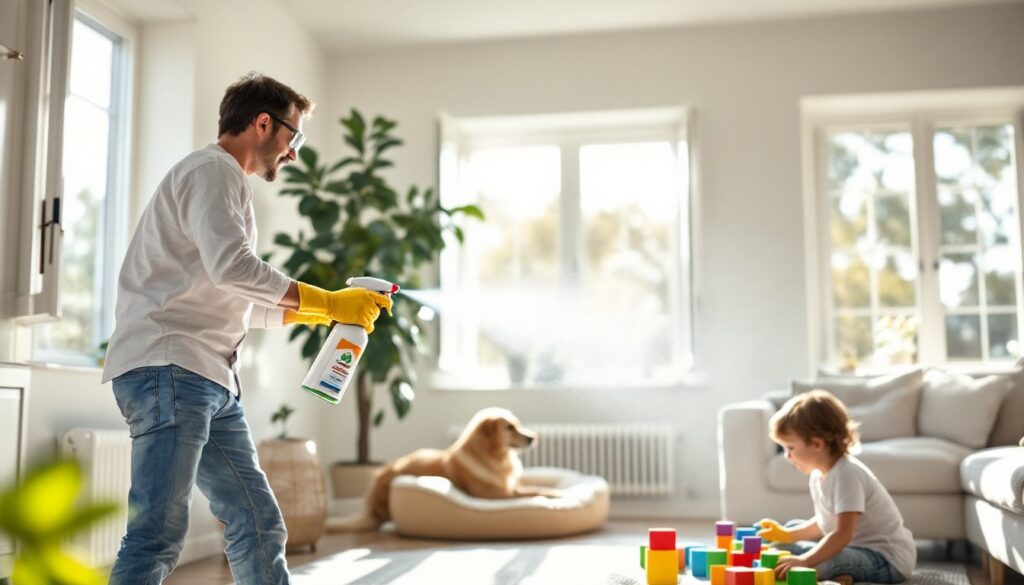
Always wear nitrile gloves and safety glasses when spraying. If you’re sensitive to aerosols or have respiratory issues, wear a dust mask or respirator rated for organic vapors. Open all windows and run fans to move air out of the room during and for at least 2 hours after application. The faster volatile compounds leave your space, the safer it is.
Ventilation and Proper Protective Measures
Ventilation is your first line of defense against chemical buildup. Cross-ventilation, opening windows on opposite sides of a room, creates airflow that pushes vapors out. If you have HVAC, turn it on and ensure air is being pulled outside, not recirculated into other rooms. Ceiling fans help move air but don’t replace opening windows.
Keep kids and pets out of the treated area for at least 2 to 4 hours after spraying, depending on the product. Check the label for the exact safety window. This isn’t being overly cautious, it’s following the manufacturer’s guidance, which is based on how long the product remains concentrated in the air. Once the smell is gone, it’s usually safe to re-enter, but give treated surfaces time to dry completely before anyone touches them, especially crawling babies or pets.
Conclusion
Choosing a pet-safe indoor bug spray means prioritizing both effectiveness and safety for your household. Look for pyrethrin-based or essential oil formulas, check EPA labels, and always read fine print about pet safety. Proper application, good ventilation, protective gear, and keeping family members out during and after treatment, ensures you get pest control without unnecessary chemical exposure. When in doubt, start with a natural oil-based spray for light problems, then escalate to pyrethrin if needed. Your home should protect your family, not put them at risk.